Cataract Surgery Self-Test Results

Home » Cataract Surgery Self-Test Results
Congratulations!
You are likely a good candidate for surgery.
The next step is coming into the office and having a consultation. A member of our staff will be in touch with you to go over your results from this self-test and discuss the best vision corrections available to you! In the mean time, we invite you to learn more about cataract surgery, meet our doctors, check out our reviews, and read our blogs!
You may also text us to request an appointment at: (559) 585-3937
-
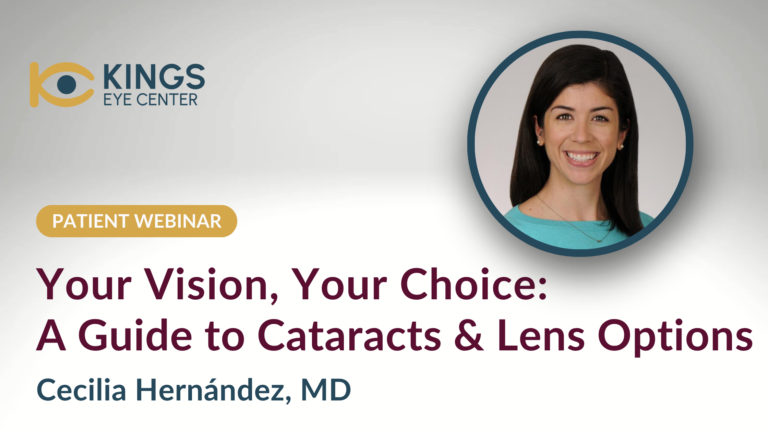
Eye health can feel complex, but protecting your sight starts with understanding two of the most common eye conditions: cataracts and glaucoma. Dr. Cecilia Hernández, a fellowship-trained glaucoma specialist and cataract surgeon at Kings Eye Center, breaks down what these conditions are, how they differ, and the latest treatment options available. Cataracts vs. Glaucoma: What’s the Difference? …
-
UV light from the sun speeds up the natural clouding of the eye’s lens, a process called cataract formation. Years of unprotected sun exposure damage the proteins inside the lens, causing them to clump together and scatter light instead of focusing it clearly. This is why outdoor workers, farmers, and long-time residents of sunny regions like Kings County often…
-
Most cataracts don’t announce themselves with sudden or dramatic vision loss. Instead, they develop slowly, often blending into everyday changes people assume are normal aging, fatigue, or prescription shifts. Over time, though, these subtle changes can significantly affect clarity, contrast, and overall visual comfort. A cataract vision assessment is designed to identify these changes early, determine whether cataracts are the cause,…
-
Cataract surgery is one of the most successful eye procedures performed today, yet many patients in Hanford still delay care because of outdated fears and misinformation. At Kings Eye Center, the clinical team frequently hears concerns such as “Will I be awake during surgery?” and “Do cataracts come back after removal?” These misconceptions often lead patients to…
-
Cataracts cause clouding of the natural lens inside the eye, leading to blurry vision, glare, and trouble seeing at night. Cataract surgery removes the cloudy lens and replaces it with a clear artificial lens called an intraocular lens (IOL). At Kings Eye Center, patients often ask how fast recovery happens, whether surgery hurts, and when…
-
Cataracts gradually cloud the eye’s natural lens, leading to blurry, dim, or distorted vision that can interfere with everyday activities. Over time, tasks such as reading, driving, cooking, and enjoying hobbies may become more difficult and less comfortable. Cataract surgery restores clearer vision by replacing the cloudy natural lens with a clear artificial intraocular lens…