
¿Alguna vez has notado que tu visión cambia poco a poco, pero has ido posponiendo un examen de la vista porque la vida se te complicó?
El Mes de la Visión Saludable es el recordatorio perfecto de que tus ojos merecen la misma atención que el resto de tu salud. Ya sea que vivas en Hanford o en las comunidades aledañas del centro de California, tomar medidas preventivas hoy puede ayudarte a proteger tu vista durante muchos años.
En Centro Oftalmológico Kings, Nuestros especialistas en cataratas, glaucoma y oftalmología general se centran en preservar y restaurar la visión mediante herramientas de diagnóstico avanzadas y atención quirúrgica moderna.
Exploremos siete consejos esenciales para la salud ocular y cómo los tratamientos actuales pueden llevar el cuidado de su visión aún más lejos.
1. Programe exámenes oculares completos periódicos.
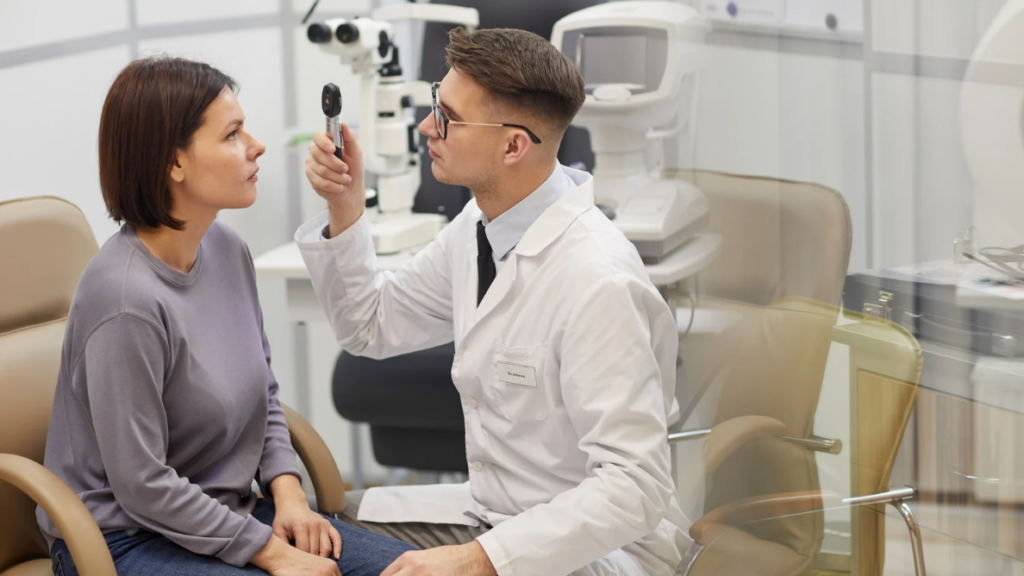
Los exámenes oculares de rutina hacen más que actualizar su receta. Según la Academia Estadounidense de Oftalmología (AAO), Muchas enfermedades oculares graves, como el glaucoma, no presentan síntomas en sus primeras etapas.
Los adultos deben programar:
- Cada 1-2 años si es menor de 60 años.
- Anualmente si tiene más de 60 años o un mayor riesgo.
En Kings Eye Center en Hanford, los exámenes oftalmológicos completos ayudan a detectar problemas a tiempo, antes de que se produzca la pérdida de visión.
2. Protege tus ojos del daño causado por los rayos UV.
La exposición prolongada a los rayos UV aumenta el riesgo de cataratas y degeneración macular. Instituto Nacional del Ojo (NEI) Recomienda usar gafas de sol que bloqueen entre el 99 y el 100% de los rayos UVA y UVB.
Consejo: Elija gafas de sol envolventes para obtener la máxima protección durante las actividades al aire libre en el clima soleado de California.
3. Controlar afecciones crónicas como la diabetes.
La retinopatía diabética sigue siendo una de las principales causas de pérdida de visión en adultos.
Si usted tiene diabetes:
- Mantener estable el nivel de azúcar en sangre.
- Realícese exámenes oculares anuales con dilatación de pupilas.
- Esté atento a la visión borrosa o fluctuante.
La detección precoz puede prevenir daños irreversibles.
4. Sigue la regla 20-20-20 para la fatiga visual digital.
El tiempo de uso de pantallas sigue aumentando, especialmente en lo que respecta al trabajo y los teléfonos inteligentes.
Cada 20 minutos:
- Mira a 20 pies de distancia
- Durante al menos 20 segundos
Este sencillo hábito reduce la fatiga visual digital y mantiene tus ojos más cómodos durante todo el día.
5. Mantén una dieta rica en nutrientes para la salud ocular.
La salud ocular comienza desde el interior. Alimentos ricos en:
- ácidos grasos omega-3
- Luteína y zeaxantina
- Vitaminas A, C y E
Favorece la salud a largo plazo de la retina y la córnea.
Las verduras de hoja verde, el pescado, los huevos y los cítricos son excelentes opciones.
6. No ignores las señales de alerta temprana.
Síntomas como:
- visión borrosa
- Dolor o presión en los ojos
- Moscas volantes o destellos
- Dificultad para ver de noche
Nunca deben ignorarse. Estos síntomas pueden indicar cataratas, glaucoma o problemas de retina.
Una evaluación temprana en Kings Eye Center en Hanford puede proteger su visión.
7. Utilice los fondos de FSA/HSA para la atención oftalmológica preventiva.
Muchos pacientes no se dan cuenta de que pueden usar Cuenta de Gastos Flexibles (FSA) o HSA (Cuenta de Ahorro para la Salud) Fondos para exámenes de la vista, anteojos, lentes de contacto e incluso procedimientos quirúrgicos elegibles.
Esto facilita lo siguiente:
- Programe su atención preventiva sin demora
- Planifique el tratamiento para cataratas o glaucoma.
- Invierte en la salud visual a largo plazo.
Si no está seguro de qué requisitos debe cumplir, nuestro equipo puede orientarle durante su visita.
Cómo la cirugía ocular moderna mejora la atención oftalmológica.
Hoy en día, la atención oftalmológica va mucho más allá del tratamiento básico. En Kings Eye Center, las opciones quirúrgicas avanzadas ayudan a restaurar y mejorar la visión con precisión y seguridad.
Cirugía de cataratas
Las cataratas provocan visión borrosa debido a que el cristalino natural del ojo se vuelve opaco. La cirugía moderna de cataratas reemplaza el cristalino con una lente intraocular (LIO) transparente, lo que a menudo mejora la visión de forma espectacular.
Manejo del glaucoma
El glaucoma daña el nervio óptico debido al aumento de la presión intraocular. Los tratamientos modernos incluyen:
- Cirugía mínimamente invasiva para el glaucoma (MIGS)
- Procedimientos avanzados para reducir la presión
- Seguimiento a largo plazo para prevenir la pérdida de visión.
Preguntas frecuentes (FAQ)
1. ¿Con qué frecuencia debo hacerme un examen de la vista?
La mayoría de los adultos deberían hacerse un examen cada 1 o 2 años, o anualmente si tienen factores de riesgo como diabetes o glaucoma.
2. ¿Pueden reaparecer las cataratas después de la cirugía?
No. Una vez extirpadas, las cataratas no vuelven a aparecer, aunque algunos pacientes pueden desarrollar posteriormente una leve opacificación de la cápsula posterior, que es fácilmente tratable.
3. ¿Cuáles son los primeros síntomas del glaucoma?
El glaucoma a menudo no presenta síntomas en sus primeras etapas. Los signos posteriores incluyen pérdida de visión periférica, presión intraocular y visión de túnel.
4. ¿Cubre el seguro médico o la cuenta FSA/HSA la cirugía ocular?
Sí, muchos exámenes oculares, tratamientos y cirugías son elegibles para la cobertura del seguro o el reembolso a través de FSA/HSA.
5. ¿Qué diferencia a la cirugía de cataratas moderna?
Los procedimientos actuales utilizan tecnología avanzada, incisiones más pequeñas y tiempos de recuperación más rápidos en comparación con las técnicas antiguas.
Testimonio de un paciente
“Aquí, todo el personal, desde recepción hasta los médicos, es muy amable, cordial y servicial. El Dr. Panttaja es mi oftalmólogo habitual, ¡y es excelente! Agradezco su paciencia al responder mis preguntas y su trato amable en general. Si buscan atención oftalmológica, sin duda lo recomiendo.”
Da el siguiente paso hacia una visión clara.
Proteger su visión comienza con un cuidado proactivo. Ya sea que necesite un examen ocular de rutina o un tratamiento avanzado para cataratas o glaucoma, Kings Eye Center está aquí para ayudar a los pacientes en Hanford y las comunidades circundantes del Valle Central.
Llame ahora para hablar con nuestro equipo y dé el primer paso hacia una visión más clara y saludable.