

Modern cataract surgery has transformed the way ophthalmologists treat cataracts. While cataract surgery has long been one of the safest and most successful procedures in medicine, today’s technology offers greater precision, personalized treatment planning, and improved visual outcomes.
If blurry vision, glare, or difficulty performing daily activities is affecting your quality of life, understanding your treatment options can help you determine whether cataract surgery may be right for you.
Quick Takeaways
- Cataracts occur when the eye’s natural lens becomes cloudy, causing vision changes over time.
- Cataract surgery removes the cloudy lens and replaces it with a clear artificial intraocular lens (IOL).
- Modern cataract surgery provides greater precision and customization than traditional approaches.
- Most procedures take approximately 10 to 20 minutes per eye.
- Many patients return to normal activities within 24 to 48 hours.
- A comprehensive cataract evaluation helps determine the most appropriate treatment plan.
Modern Cataract Surgery vs Traditional Cataract Surgery
The primary goal of cataract surgery has always been to restore vision by removing the eye’s cloudy natural lens. While that objective remains the same, advances in technology have significantly improved how cataract surgery is planned and performed.
Traditional cataract surgery focused primarily on restoring vision affected by cataracts. Modern cataract surgery continues to achieve excellent visual outcomes while offering greater opportunities to personalize treatment based on each patient’s visual needs, lifestyle, and eye health.
Modern Cataract Surgery: Precision and Personalization
Modern cataract surgery builds upon the success of traditional techniques through advanced diagnostics, improved surgical planning, and sophisticated lens technologies.
Today’s procedures allow ophthalmologists to tailor treatment plans to each patient’s visual goals. Advanced measurements and surgical techniques help optimize lens selection and improve precision throughout the process.
The result is a more personalized approach to vision correction that goes beyond simply removing the cataract.
Traditional Cataract Surgery: Restoring Vision
Traditional cataract surgery has helped millions of patients regain clearer sight. During the procedure, the cloudy lens is removed and replaced with an artificial intraocular lens.
For many years, the primary focus was restoring functional vision and improving quality of life. Patients often experienced significant improvements in vision, though many continued to rely on glasses for certain activities after surgery.
Traditional cataract surgery remains a highly effective treatment option and continues to deliver excellent results.
How Modern Advances Have Improved Cataract Surgery
Several innovations have improved the cataract surgery experience for both patients and surgeons.
Modern cataract surgery may include:
- Advanced eye measurements and imaging
- More precise surgical planning
- Smaller surgical incisions
- Improved lens positioning
- Faster recovery for many patients
- Enhanced visual outcomes
These advances help improve precision while maintaining the safety and effectiveness cataract surgery is known for.
According to the American Academy of Ophthalmology, cataract surgery remains one of the safest and most commonly performed procedures in the United States.
Who Is a Good Candidate for Modern Cataract Surgery?
Many people develop cataracts gradually as part of the natural aging process. Symptoms often become more noticeable over time and may begin affecting everyday activities.
You may be a candidate for cataract surgery if you experience:
- Blurry or cloudy vision
- Increased glare from headlights or sunlight
- Halos around lights
- Difficulty driving at night
- Faded colors
- Frequent eyeglass prescription changes
- Difficulty reading or performing detailed tasks
The best candidates are individuals whose cataracts are affecting their quality of life, independence, or ability to perform daily activities comfortably.
A comprehensive eye examination can determine whether cataracts are contributing to your symptoms and whether surgery may be beneficial.
What to Expect During a Cataract Evaluation
Every cataract treatment plan begins with a comprehensive eye examination.
During your appointment, your ophthalmologist evaluates your vision, eye health, and the impact cataracts may be having on your daily life. Specialized measurements are performed to help guide surgical planning and lens selection.
Your cataract evaluation may include:
- Vision testing
- Dilated eye examination
- Corneal measurements
- Eye length measurements
- Review of medications and medical history
- Discussion of treatment goals and lens options
These tests help ensure accurate surgical planning and provide important information about the overall health of your eyes.
The evaluation also gives you an opportunity to ask questions about the procedure, recovery process, and expected visual outcomes.
The Modern Cataract Surgery Procedure
Modern cataract surgery is typically performed on an outpatient basis and generally takes 10 to 20 minutes per eye.
During the procedure:
- Numbing drops or local anesthesia are used to keep the eye comfortable.
- A small incision is created in the cornea.
- The cloudy lens is gently broken apart and removed.
- A clear artificial intraocular lens is implanted.
- The eye begins healing immediately after surgery.
Most patients are surprised by how efficient and comfortable the procedure feels.
Book Your Cataract Consultation
Cataract surgery permanently removes the cloudy lens responsible for cataract symptoms, helping many patients regain clearer vision and return to the activities they enjoy.
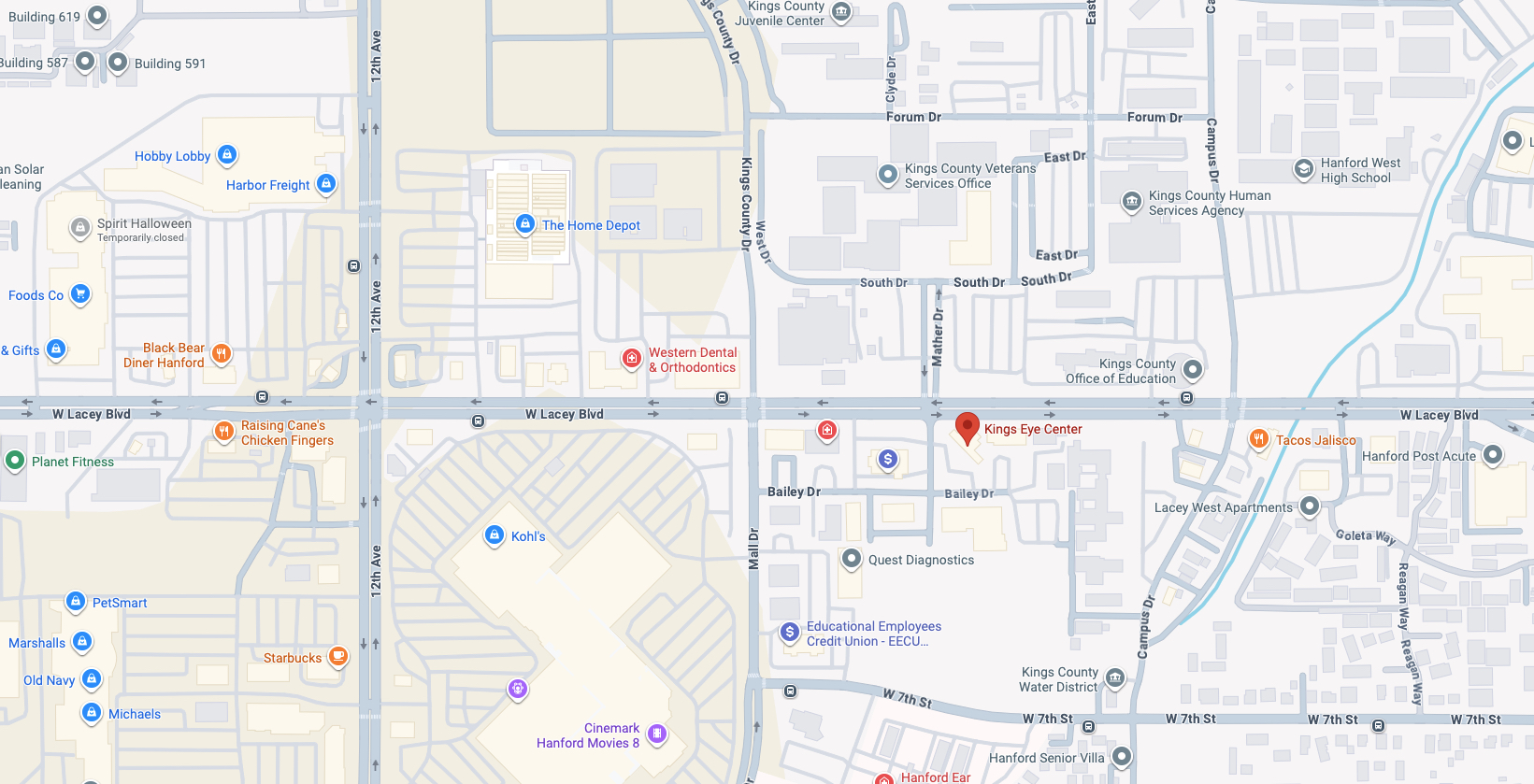
Kings Eye Center provides comprehensive cataract evaluations and surgical care for patients throughout Hanford and Kings County. Using advanced technology and personalized treatment planning, the clinical team helps patients achieve the best possible visual outcomes.
If blurry vision, glare, or difficulty with daily activities is affecting your quality of life, the team at Kings Eye Center can help you explore your treatment options. Call us today at (559) 585-3937.
Frequently Asked Questions
Reviewed by the clinical team at Kings Eye Center. Last reviewed: June 2026. The information in this article is for educational purposes only and does not substitute for a comprehensive eye examination by a qualified eye care professional.