

Healthy aging includes protecting your vision. As you get older, your risk of cataracts, glaucoma, age-related macular degeneration (AMD), and other eye conditions increases. Some conditions cause few or no early symptoms, so clear vision does not always mean healthy eyes. A comprehensive eye exam helps detect changes early and guides treatment when needed. At Kings Eye Center, the clinical team helps patients in Hanford and throughout Kings County make eye health part of lifelong wellness.
What does healthy aging mean for your eye health?
Healthy aging means caring for your eyes as part of your overall health, not waiting until vision problems interfere with daily life.
At Kings Eye Center, patients often ask whether changes such as needing more light to read or having trouble with glare are simply part of getting older. Some changes are normal, but significant vision loss is not a normal part of aging. The National Eye Institute recommends comprehensive dilated eye exams because many age-related eye diseases have no early warning signs.
Healthy habits also support eye health. Managing diabetes and blood pressure, staying physically active, eating a balanced diet, avoiding smoking, and protecting your eyes from ultraviolet light all contribute to healthier aging.
What eye conditions become more common with age?
Age increases the risk of several common eye conditions. Cataracts cause the eye’s natural lens to become cloudy and can make vision blurry, hazy, or less clear at night.
Glaucoma damages the optic nerve and can progress without noticeable symptoms. AMD affects the macula, the part of the retina responsible for sharp central vision. Diabetes can also damage the small blood vessels in the retina and affect sight.
The National Eye Institute identifies cataracts, glaucoma, AMD, and diabetic eye disease among important eye health concerns as people age.
What signs should you watch for as you age?
Some eye diseases develop silently, while others cause noticeable changes. Schedule an eye evaluation when you notice:
- Blurry or cloudy vision
- Increasing difficulty reading or seeing in low light
- New problems with glare
- Difficulty seeing faces or details
- Straight lines that look wavy or distorted
- Loss of peripheral vision
- New or increasing floaters or flashes
Sudden vision loss, severe eye pain, or a sudden increase in flashes and floaters requires immediate medical attention.
A useful distinction matters here: normal aging can change how your eyes function, but new or worsening vision changes require evaluation. An eye doctor can determine whether the change comes from a normal age-related adjustment, a refractive error, or an eye disease.
When should you schedule an eye exam?
Schedule a comprehensive eye exam even when your vision seems stable. Your eye doctor determines how often you need examinations based on your age, medical history, family history, medications, and risk factors.
People with diabetes, high blood pressure, a family history of glaucoma or AMD, or previous eye disease often need closer monitoring. A comprehensive exam can detect some conditions before symptoms appear.
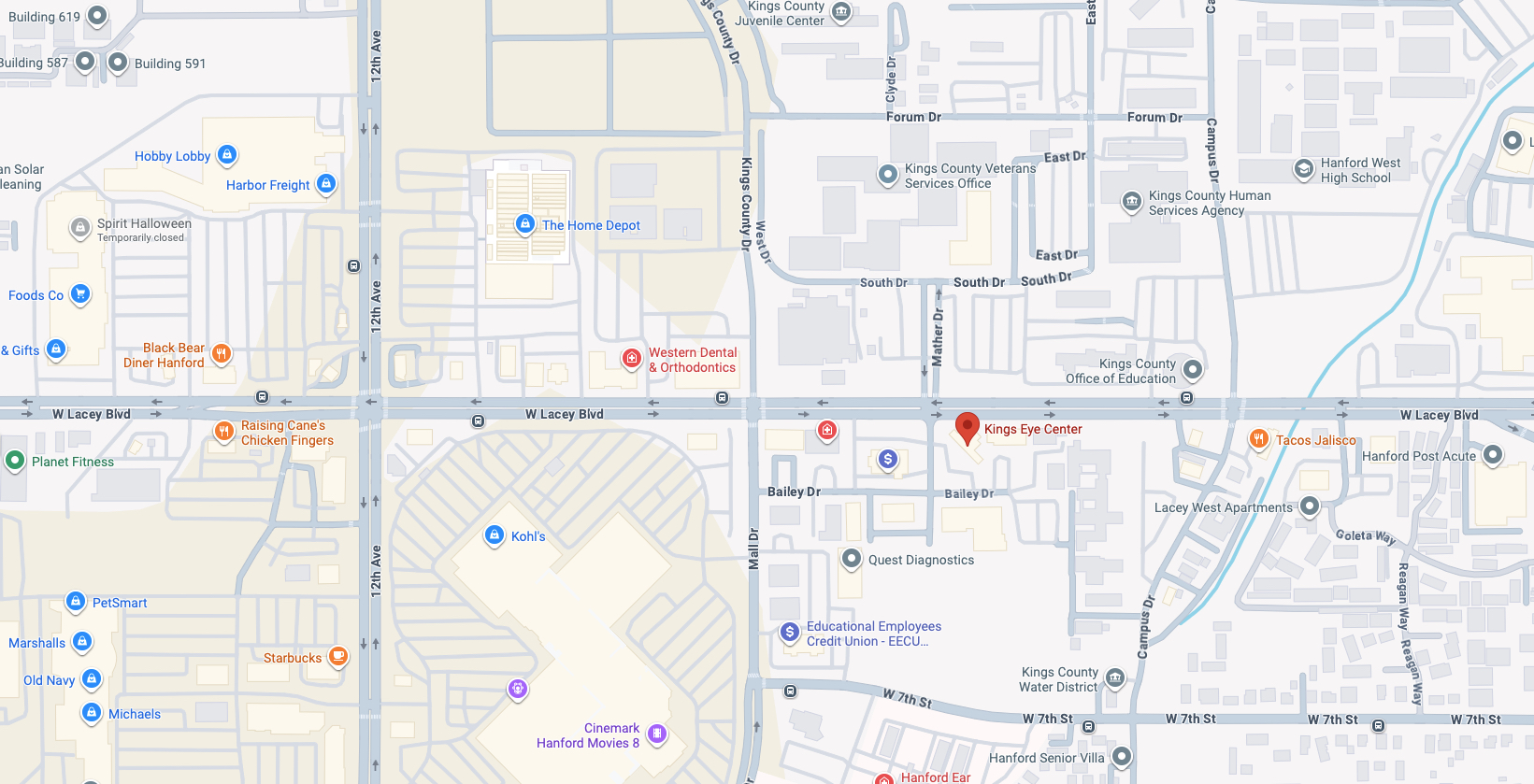
If you live in Hanford or another Kings County community, Kings Eye Center’s Hanford location provides access to comprehensive ophthalmology services and specialized eye care.
If you’re experiencing vision changes in Hanford or elsewhere in Kings County, the clinical team at Kings Eye Center can evaluate your eyes and discuss appropriate next steps. Schedule an appointment at Kings Eye Center or call (559) 585-3937.
How is age-related eye disease diagnosed?
A comprehensive eye exam combines several tests to evaluate vision and eye health. Your eye doctor checks visual acuity, examines the front and back of the eye, measures eye pressure when appropriate, and evaluates the retina and optic nerve.
Dilation allows the doctor to examine structures inside the eye that cannot be fully assessed through a basic vision check. Additional testing can help evaluate conditions such as glaucoma or retinal disease when indicated.
The goal is not simply to determine whether you need stronger glasses. A comprehensive examination helps identify eye disease early and guides appropriate monitoring or treatment.
How are age-related eye conditions treated?
Treatment depends on the condition, its severity, and your overall health. Some patients need monitoring and lifestyle changes. Others need prescription medication, laser treatment, or surgery.
Cataracts can be treated with cataract surgery when cloudy vision interferes with daily activities. Glaucoma treatment can include prescription eye drops, laser procedures, or surgery depending on the diagnosis. Retinal conditions such as AMD require condition-specific monitoring and treatment.
The right treatment starts with an accurate diagnosis from an ophthalmologist or optometrist. Do not start or stop eye medication based only on symptoms or information online.
What should you expect at an eye appointment?
Bring a list of your medications, medical conditions, and known family history of eye disease. Tell your eye doctor about vision changes, even when those changes seem minor.
At Kings Eye Center, patients in Hanford and surrounding Central California communities have access to comprehensive eye care and the on-site Kings Eye Surgical Center for surgical care when appropriate. This local care pathway allows patients to discuss evaluation, treatment options, and follow-up care with an experienced clinical team.
How can you protect your eyes as you age?
Healthy aging starts with habits that support your whole body. Eat a balanced diet, stay active, manage chronic health conditions with your medical team, avoid smoking, and wear sunglasses that provide UV protection when outdoors.
Know your family eye health history. Glaucoma and AMD can run in families, so sharing that information with your eye doctor can help guide your care.
Most importantly, do not use clear vision as the only measure of eye health. Some serious eye diseases develop before noticeable symptoms appear. Regular comprehensive eye exams give your eye doctor an opportunity to identify changes early.
What are common questions about healthy aging and eye health?
Reviewed by the clinical team at Kings Eye Center. Last reviewed: August 2026. The information in this article is for educational purposes only and does not substitute for a comprehensive eye examination by a qualified eye care professional.