

If your vision seems less sharp than it used to be, cataracts may be one possible explanation. Cataracts occur when the eye’s natural lens gradually becomes cloudy, reducing the amount of clear light that reaches the retina. As this clouding progresses, vision can become blurry, colors may appear faded, and everyday activities may become more difficult.
Many people initially attribute these changes to normal aging. However, recognizing cataract symptoms early can help you seek treatment before vision problems begin affecting your independence and quality of life.
Quick Takeaways
- Cataracts occur when the eye’s natural lens becomes cloudy
- Common cataract symptoms include blurry vision, glare, halos, and fading colors
- Vision changes typically develop gradually over time
- Cataracts can affect reading, driving, and other daily activities
- A comprehensive eye exam is needed to diagnose cataracts
- Cataract surgery is the only treatment that removes cataracts and restores clear vision
When Should Cataract Symptoms Be Taken Seriously?
Not every vision change indicates a serious eye condition, but cataract symptoms should not be ignored when they begin affecting everyday life. If you find yourself struggling with glare, difficulty driving after sunset, or blurry vision that isn’t corrected by glasses, it may be time for an evaluation.
According to the American Academy of Ophthalmology, cataracts are among the most common causes of age-related vision impairment. Fortunately, modern cataract treatment can effectively restore vision for many patients.
Why does vision seem cloudy?
The lens inside the eye is normally transparent. As cataracts develop, proteins within the lens begin to change, reducing clarity and causing vision to appear hazy or foggy.
Why do lights create glare or halos?
A clouded lens scatters incoming light rather than focusing it properly. This can create halos around lights, glare from headlights, and difficulty adjusting to bright environments.
How Cataract Symptoms Affect Daily Life

Many patients first notice cataracts during routine activities. Tasks that once seemed simple may require more effort, brighter lighting, or frequent prescription changes.
Why is reading becoming more difficult?
Cataracts can reduce contrast sensitivity, making letters appear less distinct. Reading books, newspapers, medication labels, or digital screens may become more challenging.
Why do colors appear different?
As cataracts progress, the natural lens may develop a yellowish tint that alters color perception. Colors often appear less vibrant, and whites may seem slightly yellow.
Why is driving at night harder?
Low-light conditions often highlight cataract symptoms. Glare from headlights and reduced contrast can make it more difficult to judge distances and identify road hazards.
What Cataract Symptoms Mean and When They Become Serious
Cataracts typically develop slowly, but they can eventually have a significant impact on visual function and daily independence.
Potential signs that cataracts are progressing include:
- Frequent changes in vision prescriptions
- Increasing difficulty recognizing faces
- Trouble performing detailed tasks
- Reduced confidence behind the wheel
- Vision that remains blurry despite corrective lenses
Unlike some eye conditions, cataracts usually do not cause pain or sudden vision loss. However, allowing symptoms to worsen can limit daily activities and reduce overall quality of life.
What symptoms should prompt an eye exam?
You should schedule an eye evaluation if you experience:
- Worsening blurry or cloudy vision
- Increased sensitivity to bright lights
- Frequent prescription changes
- Difficulty reading, driving, or performing daily tasks
A comprehensive eye exam can determine whether cataracts are responsible and help identify any other vision concerns.
Could Another Eye Condition Be Causing Similar Symptoms?
Although cataracts are a common cause of blurry vision and glare, other eye conditions can create similar symptoms.
Examples include:
- Dry eye disease
- Age-related macular degeneration
- Glaucoma
- Retinal disorders
- Diabetic eye disease
Because multiple eye conditions can affect vision at the same time, a thorough examination is important for obtaining an accurate diagnosis.
How Kings Eye Center Evaluates Cataract Symptoms
At Kings Eye Center, cataract evaluations focus on understanding how lens clouding is affecting both vision and daily activities.
What can patients expect during the exam?
Your doctor may perform several tests, including:
- Visual acuity testing
- Slit-lamp examination of the eye’s lens
- Retinal evaluation
- Glare and contrast sensitivity testing
These diagnostic tests help determine the severity of cataracts and whether treatment may be beneficial.
What Happens After a Cataract Evaluation?
Following your examination, your eye doctor will review the findings and discuss appropriate treatment options.
In some cases, updated glasses or environmental adjustments may help manage symptoms temporarily. However, when cataracts begin affecting daily activities, cataract surgery is generally the most effective treatment.
During the procedure, the cloudy natural lens is removed and replaced with a clear intraocular lens (IOL). Today’s cataract surgery techniques provide excellent outcomes and can help patients enjoy clearer vision for years to come.
Cataract Care in Kings County and California’s Central Valley
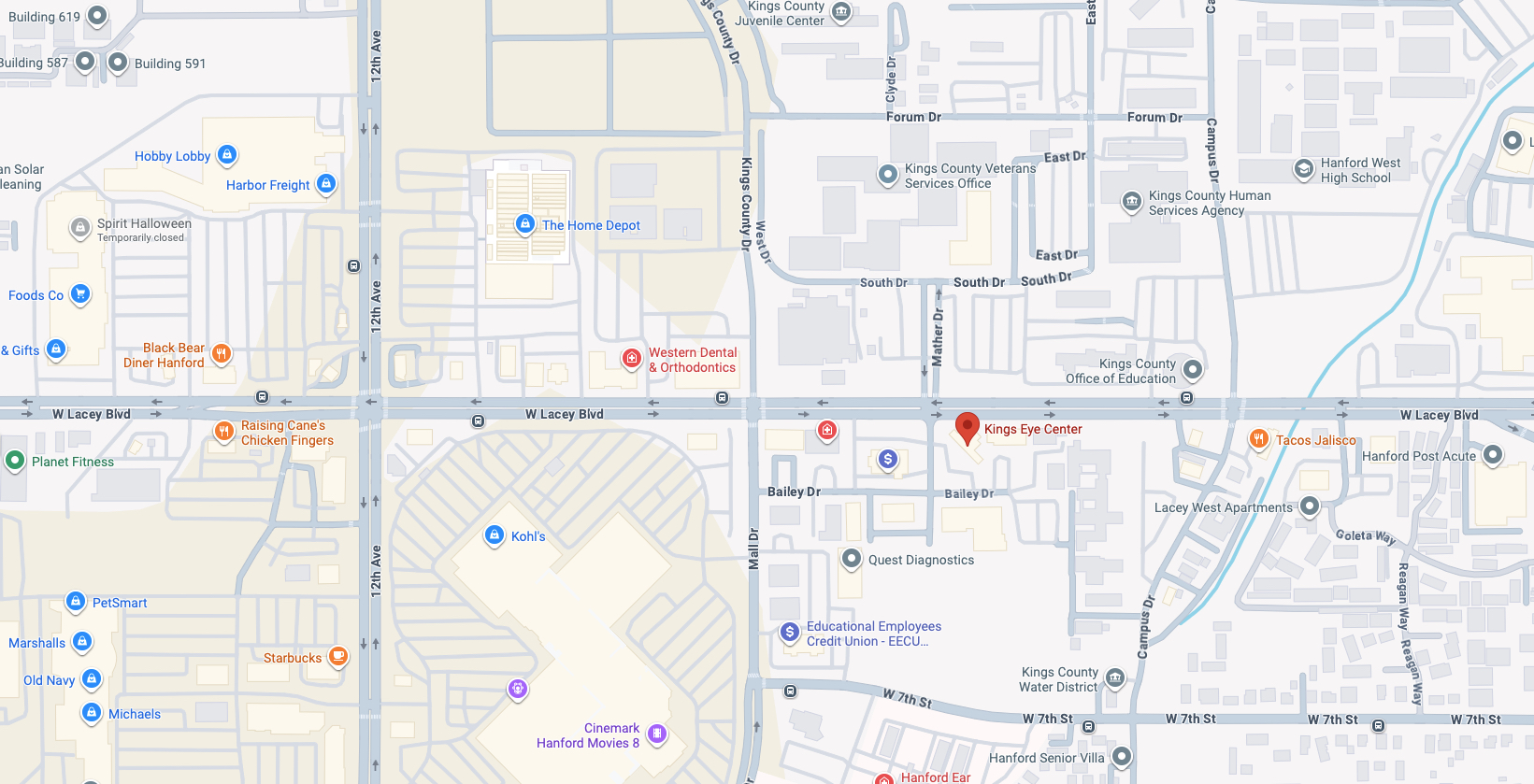
Kings Eye Center provides comprehensive cataract evaluations and advanced treatment options for patients throughout Hanford, Kings County, and surrounding Central Valley communities. Our team is committed to helping patients maintain healthy vision through every stage of life.
If you are experiencing blurry vision, glare, halos around lights, or difficulty driving after dark, a comprehensive eye examination can help determine whether cataracts are affecting your sight.