

Cataract surgery is one of the most successful eye procedures performed today, yet many patients in Hanford still delay care because of outdated fears and misinformation. At Kings Eye Center, the clinical team frequently hears concerns such as “Will I be awake during surgery?” and “Do cataracts come back after removal?” These misconceptions often lead patients to wait longer than necessary, even when vision is already affecting daily life.
Modern cataract surgery replaces the clouded natural lens with a clear artificial intraocular lens, restoring vision in most patients quickly and safely. According to the American Academy of Ophthalmology, millions of cataract surgeries are performed each year in the United States with very high success rates.
Quick Takeaways
- Cataract surgery replaces a cloudy lens with a clear artificial lens
- Waiting until vision is “bad enough” is not required for treatment
- Most patients return to normal activities within 24–48 hours
- Cataract surgery does not grow back once removed
- Early evaluation helps protect long-term vision and independence
What is a cataract and how does it affect vision?
A cataract is a clouding of the eye’s natural lens. This lens sits behind the iris and helps focus light onto the retina. When it becomes cloudy, vision becomes blurry, dim, or yellowed.
Cataracts most often develop with age, but they also form faster in patients with diabetes, long-term sun exposure, smoking history, or previous eye injury. In Kings County, prolonged UV exposure is a common risk factor seen in everyday patients.
If left untreated, cataracts gradually reduce clarity, making driving at night, reading, and recognizing faces more difficult.
What are the most common cataract surgery myths?
“You must wait until the cataract is fully developed”
This is false. Cataract surgery is recommended when vision interferes with daily life, not when vision becomes nearly blind.
“Cataract surgery is painful”
Cataract surgery is performed using numbing eye drops. Patients typically feel pressure, not pain, during the procedure.
“Recovery takes a long time”
Most patients resume normal activities within 24–48 hours. Vision continues improving over several days as the eye heals.
“Cataracts come back after surgery”
A cataract cannot return once the natural lens is removed. Some patients develop clouding behind the lens implant, which is treatable with a quick laser procedure in the office.
When should you see an eye doctor?
You should schedule an eye exam if you notice:
- Blurry or cloudy vision
- Difficulty seeing at night
- Glare or halos around lights
- Faded or dull colors
- Frequent changes in glasses prescription
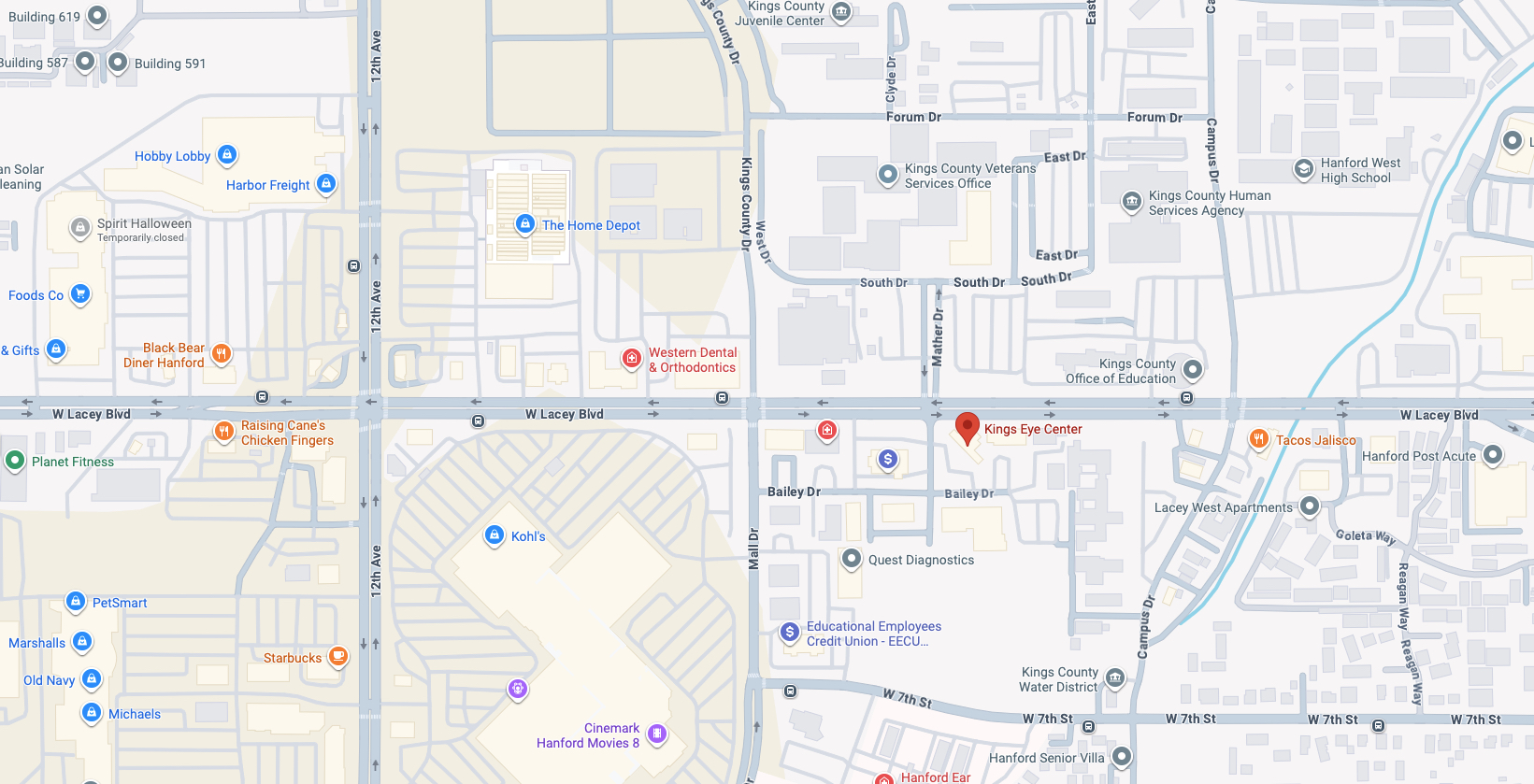
At Kings Eye Center in Hanford, comprehensive eye exams help determine whether cataracts or another condition is affecting vision. The clinical team often sees patients who delayed care due to fear of surgery, only to discover that earlier treatment would have preserved better quality of life.
How is cataract surgery performed?
Cataract surgery removes the cloudy lens and replaces it with a clear intraocular lens (IOL). The procedure is typically done in an outpatient surgical center, including the Kings Eye Surgical Center in Hanford.
Patients stay awake but comfortable with numbing drops. The procedure usually takes less than 20 minutes per eye. Advanced lens options can also be selected based on lifestyle needs, such as reading, driving, or reducing dependence on glasses.
What to expect at your appointment
During your visit at Kings Eye Center, your eye doctor will:
- Perform a full eye exam and cataract evaluation
- Measure your eye for lens implant planning
- Discuss your vision goals and lifestyle needs
- Review whether surgery is appropriate now or later
This step-by-step evaluation ensures treatment is personalized, not rushed, and based on real visual needs.
If you are experiencing blurry vision, glare, or difficulty with daily tasks, Kings Eye Center provides comprehensive cataract evaluation and surgical care. The team focuses on clear communication, patient education, and individualized treatment planning.
Frequently Asked Questions
Reviewed by the clinical team at Kings Eye Center. Last reviewed: June 2026. The information in this article is for educational purposes only and does not substitute for a comprehensive eye examination by a qualified eye care professional.