

Cataracts gradually cloud the eye’s natural lens, leading to blurry, dim, or distorted vision that can interfere with everyday activities. Over time, tasks such as reading, driving, cooking, and enjoying hobbies may become more difficult and less comfortable.
Cataract surgery restores clearer vision by replacing the cloudy natural lens with a clear artificial intraocular lens (IOL). Most patients notice improved vision within days, along with greater confidence and independence in daily life. At Kings Eye Center in Hanford, cataract surgery helps patients across Kings County return to the activities and routines that matter most.
Quick Takeaways
- Cataracts cloud the natural lens and reduce vision over time
- Cataract surgery replaces it with a clear intraocular lens (IOL)
- Symptoms include blurry vision, glare, and night driving difficulty
- Many patients resume normal activities within 24–48 hours
- A comprehensive eye exam determines when treatment is needed
How Cataracts Affect Everyday Life
Cataracts form when proteins in the eye’s natural lens break down and clump together, causing cloudiness that scatters light and reduces visual clarity.
Early on, vision changes may feel minor—reading small print becomes harder; night driving feels more uncomfortable, and colors may appear less vibrant. Over time, these changes can begin to impact independence and daily comfort.
According to the National Eye Institute, cataracts are one of the most common causes of vision changes in adults over 60.
Common daily challenges include:
- Difficulty reading books, labels, or screens
- Trouble seeing road signs while driving
- Increased glare from sunlight or headlights
- Reduced confidence in unfamiliar environments
Because cataracts develop slowly, many people adjust without realizing how much their vision has changed.
Signs Cataracts Are Affecting Independence
Cataracts do not cause pain, but they steadily reduce visual clarity and daily function.
Common symptoms include:
- Cloudy or blurry vision
- Difficulty seeing at night
- Increased glare or halos around lights
- Faded or yellowed colors
- Frequent prescription changes
- Trouble recognizing faces at a distance
A key indicator is lifestyle change. Many patients begin avoiding night driving, limiting social activities, or stepping away from hobbies that require visual detail. These changes often signal that cataracts are affecting independence.
When to Schedule an Eye Exam
A comprehensive eye exam is recommended when vision changes begin interfering with daily activities.
Modern cataract care is based not only on how advanced the clouding appears, but on how vision affects function, safety, and quality of life. If reading, driving, work, or hobbies become more difficult, an evaluation is appropriate.
Cataracts do not improve on their own, so timely evaluation helps determine whether surgery is needed.
The clinical team at Kings Eye Center uses detailed diagnostic testing and lifestyle-based evaluation to understand how cataracts are affecting each patient’s daily routine and visual goals.
How Cataract Surgery Restores Vision and Function
Cataract surgery removes the cloudy lens and replaces it with a clear intraocular lens (IOL), restoring how light focuses on the retina and improving overall visual clarity.
Most patients notice brighter, sharper vision within days, with continued improvement during healing.
Reading and Close-Up Tasks
Text becomes clearer and easier to read, improving comfort with books, phones, menus, and medication labels.
Driving and Safety
Cataracts often cause glare and reduced night vision. After surgery, many patients experience improved contrast and clarity on roads and signage, making driving safer and more comfortable.
Hobbies and Recreation
Many hobbies rely on detail vision. Patients often return to activities such as:
- Gardening
- Crafting and sewing
- Golf and outdoor recreation
- DIY projects and detail-based hobbies
Daily Independence
Routine tasks such as cooking, organizing medications, and recognizing faces often become easier and more confident.
Brighter Colors and Clearer Contrast
Cataracts often make colors appear dull, faded, or yellowed over time.
After surgery, many patients report that colors look brighter, sharper, and more natural, helping everyday environments feel more vivid and engaging.
Lens Options for Personalized Vision
Modern cataract surgery allows for customized intraocular lens selection based on lifestyle and visual needs.
At Kings Eye Center, advanced surgical planning tools and IOL options help match each patient’s goals—whether prioritizing distance vision for driving, reading ability, or reducing dependence on glasses for daily tasks.
Recovery and Returning to Normal Activities
Most patients return to normal daily activities within 24–48 hours after surgery, although vision continues improving over several weeks.
During early recovery, patients are typically advised to avoid heavy lifting, swimming, rubbing the eyes, and exposure to dust or debris. Following post-operative instructions supports proper healing and optimal outcomes.
What Patients Commonly Notice After Surgery
While every patient’s experience is unique, many report:
- Sharper and clearer vision
- Reduced glare and improved night vision
- Brighter, more vibrant colors
- Easier reading and screen use
- Increased confidence in daily activities
- Greater independence
Many patients are surprised by how much cataracts had been affecting their lifestyle before treatment.
What to Expect During a Cataract Consultation
A cataract consultation includes a comprehensive eye exam, diagnostic imaging, and a discussion of symptoms and lifestyle goals.
Your eye doctor will evaluate how cataracts are affecting your vision and recommend a personalized treatment plan. Lens options are reviewed based on your daily activities—such as driving, reading, travel, and hobbies.
Schedule Your Cataract Evaluation in Hanford
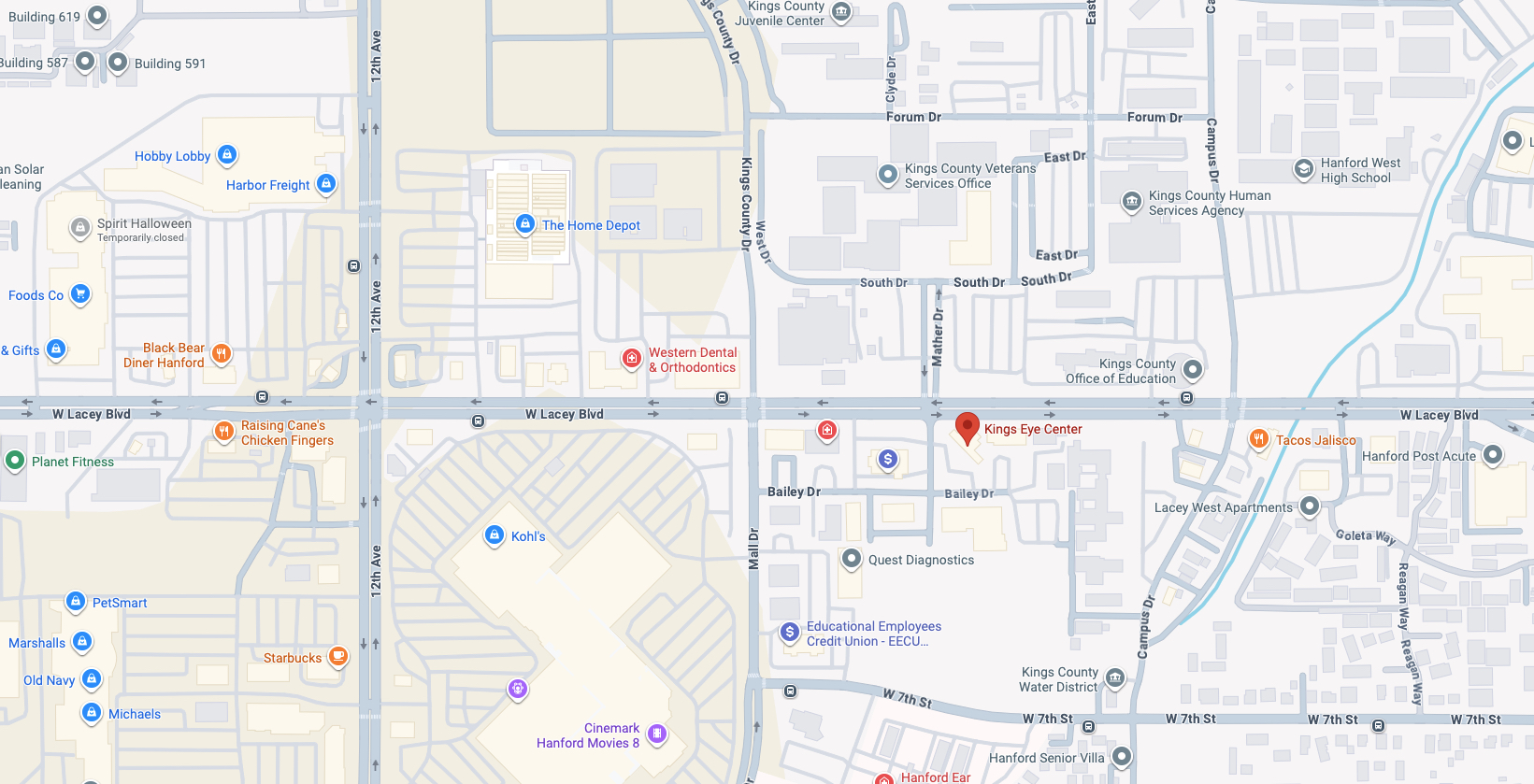
If cataracts are affecting your ability to read, drive, or enjoy daily life in Hanford or surrounding Kings County communities, a comprehensive evaluation can help determine the right next step.
Kings Eye Center provides advanced cataract care tailored to each patient’s visual needs and lifestyle goals. Call us today at (559) 585-3937.
Frequently Asked Questions
Reviewed by the clinical team at Kings Eye Center. Last reviewed: June 2026.
This article is for educational purposes only and does not replace a comprehensive eye examination by a qualified eye care professional.